To Be a Human Is to Be a Thing
On trading daily survival for comfort, and why creation and struggle are what keep a person from withering into a thing.
“I think Bataille you really said it best, that to be a human is to be a thing.”
-Spark Lights the Friction
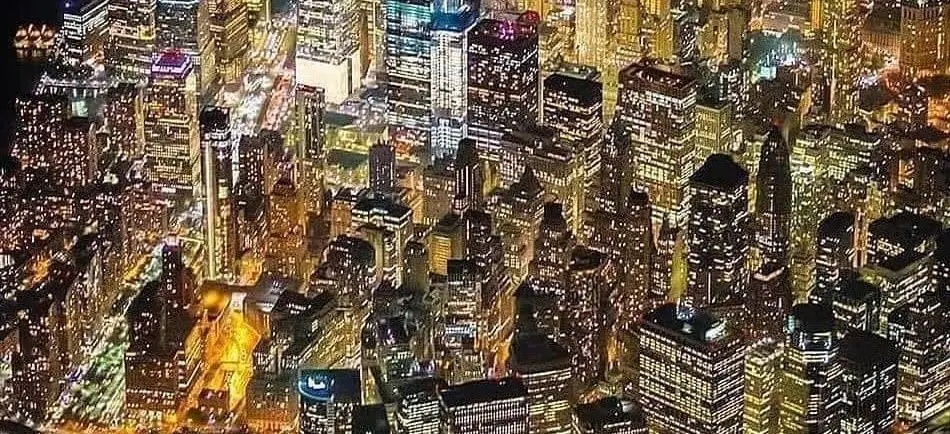
I use public transportation daily. I’ve always dreamed of the metro life, and now I have it. I am a part of a city that swallows me up. And when I come out of my office building every day, it’s dark, and from the concourse of One New York Plaza, the lights of the downtown buildings are like a massive blanket. I pretend I could wrap myself up in them, and for about 10 seconds, until the perspective changes and I lose the angle, it feels otherworldly. I can’t believe I am a part of this construction. It’s an artificial creation, but it is also a part of nature. Manhattan is no different than the giant coral reefs. We all come from this same chemically charged mix of earth, water, and sun.
…and now I lead a glamorous life because I am finally a real part of the hoi polloi. I own a hat and a scarf and gloves. I am building my wardrobe, and I am becoming more and more a part of this world. In three days I will have medical insurance, and every day I put my time in doing paperwork in order to pay down more of my personal debt. This is the life that I live now. Once the debt is paid, I will be able to write in black, and the black ink will then be injected into my arms. And this is the only thing I wait for now…because I am happy. And all along I’ve thought happiness was the ultimate goal. I was sure every motivation came back to the pleasurable sense. But as I grow more comfortable and in control, I find myself losing some sense of my own existence. There is a part in there that is slowly going away. And I am so distracted that I hardly sense it. And I realize that people who are comfortable throughout their whole lives have never realized it was ever there.
Struggle is the natural human context. The ancestors that gave us our evolved genetic makeup lived day-to-day. Before the invention of totalitarian agriculture and before the idea of surplus, survival was a daily consideration. And that is the environment we were tailored for. Without struggle human life loses meaning. Our brains thrive off of competition; we go to our limits in order to test ourselves. We push ourselves to higher planes, because we’ve conquered this world. It is no longer a challenge. Now we seek something more, so we create concepts like sports and social mobility to be mental surrogates. This is the root of my feeling of loss. I no longer live day to day. I have a job that takes care of me like a parent, and there is nothing more to push against because nothing is pushing back.
This life is about a feeling of dissatisfaction. It’s a central theme. We are happy, but are we satisfied? It’s dangerous to confuse the two. Because as long as humans can procreate, as long as individuals can create new individuals into whom they can inject their own pearls of genetic accomplishment, there will be happiness. But satisfaction is rarely achieved. This is where the lack of meaning becomes the tangible issue: if a parent’s reason for being is solely derived from the happiness of his or her child, and that child’s reason for being is derived from the happiness of his or her child, and the cycle continues endlessly, then there is no point. The burden keeps getting passed to the next generation, and the promise is never fulfilled. This is the trick our survival instinct plays, and the point is that we need to satisfy ourselves. This is done by creating struggle, not by trying to erase it for the next generation.
I feel guilt because I no longer am in a struggle for survival, and I am afraid of heading down a path that leads to the erasure of the sense of my own importance and individuality. This is a guilt not born in the arena of politics (I work for the benefit of the Proletariat, and while I talk the talk, I still consider myself, as Bataille considered himself, “The enemy from within.”), it is born in the arena of spirituality. I am afraid of my desk and my computer screen, not because it is any kind of challenge, but because it is becoming too easy, and humans in this context have the tendency to become fat and lazy. And then, as long as they are not sincerely religious, they wonder why their life has no meaning. And what they do not understand is that we are not here to consume. We are not here to receive. We are not objects; we are subjects. We are muscles. We are machines, and like all things on this earth, if we are not put to use, we will wither and become weak. Because we are tools, and all tools have a purpose. Our purpose is survival, and our minds have mistaken the concept of survival for the portion of that concept which is ruled by procreation.
Humans are meant to create. We are meant to create more humans, but we are also meant to create many other things. Creation is often hard and frustrating work, and when the individual becomes lazy and decides that it is no longer an objective, the human ceases to become the individual. This loss is what I am scared of, and it is what keeps me writing. I do not want to forget that I am like all other things. I obey the same logical properties that this universe lays down, and the struggle for existence is not meant to be easy. Like everything else, I will eventually lose. Impermanence rules all, and this is the most important idea to struggle against. My creations will not end with the loss of my own consciousness. They will outlast me. They will eventually disappear, but even when I am gone they will have the ability to affect the Other. I know this because I am affected by the dead as they continue to exist, and there is one greater than these warriors.
The column as printed
Alarm #20, Spring 2005. Select a page to see it full size.