Cult Psychology
On the psychology of cults, the line between cult and religion, and why democracy depends on worshipping ideas rather than prophets.
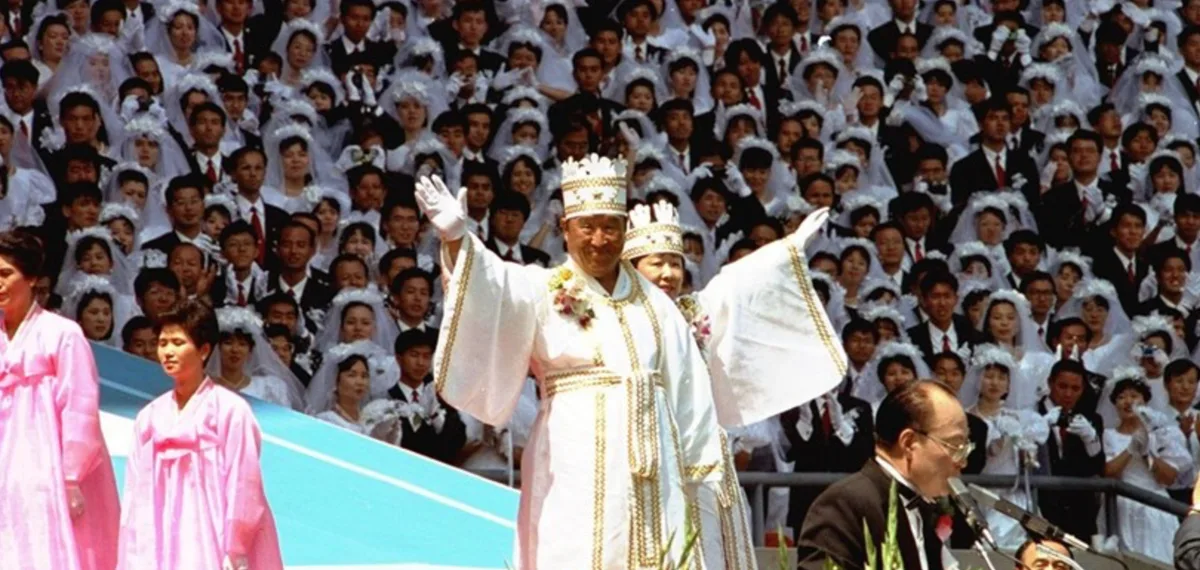
"Emperors, kings and presidents…have declared to all Heaven and Earth that Reverend Sun Myung Moon is none other than humanity's Savior, Messiah, Returning Lord and True Parent." - Publisher of the Washington Times and the only man to be crowned “King of Peace” in front of twelve United States Congressmen.
Human cultures have always encouraged and nurtured the prophetic figure. Apart from spirituality, the desire for a superhuman leader has regularly been strong enough to draw armies and treasure chests of support. From the beginning (or at least the recorded beginning), charismatic individuals have brainwashed, subjugated, and made military forces out of groups of willing followers. This power-structure is older than any republic, better tested than any democracy, and likely more ancient than any civilization.
I am fascinated by the psychology of the cult, and I want to understand how these extremely dysfunctional situations arise. I try to put myself in the mind of either the venerated or the subjugated. It is so foreign. It feels so wrong. Putting the whole of my energy and faith into one human individual (especially one as publicly flawed as most cult leaders are) does not compute. Likewise, asking another human to irrationally give up any part of their individuality for my benefit seems so morally repugnant. Is it really that easy for our minds to be washed clean and put to another's use? Is it that tempting to destroy an individual's autonomy in order to increase one's position of power?
The political weapon of the modern cultist is the argument that any criticism is religious persecution. However, there is one clear distinction between cult and religion: Cults worship human beings who are alive and still in the business of composing doctrine. Religions worship the fixed legacy of individuals who are no longer accessible. This is extremely important. All religions start as cults; however, very few cults evolve into religions. Almost universally, the power and influence of the prophet dissolves shortly after death. The exceptions are those whose charisma can be passed on through second-hand accounts and whose canons are strong enough to survive the ceaseless advance of modernity. There is something immensely powerful about a text that can be relevant and valuable to humans thousands of years after the fact. Correspondingly, there is nothing divine about a prophet that modifies doctrine to harmonize with an ever-shifting contemporary power structure.
Despite the discrepancy, there will always be a dictum of caution associated with attacking cults, mainly because we live in a nation that is (rightly) mandated to tolerate diversity of religious belief. When, in the 1970s, parents of Moonie-controlled teenagers delivered tearful pleas to Congress asking for an investigation of the Unification Church, they were, for the most part, ignored and rebuffed. Maybe it was because of Sun Myung Moon's financial ties to the conservative political establishment; however, even the most uninfluenced members of congress were hesitant to say anything negative about a self-proclaimed Messiah who allegedly kept zombified young-Americans in slave-like servitude. When Moon was finally prosecuted and jailed, it was for tax fraud. During the trial, the government was careful to avoid any criticism of his ecclesiastical operation, and there was no effort to tarnish his brand. The snares and pitfalls of exposing even this obscure religion as a scam proved to be too perilous. Even so, Moon's church played the persecution card to perfection, and when he emerged after 18 months, his enterprise was stronger for it. To this day, Reverend Moon is one of the most powerful men involved with American politics. He publishes a major newspaper emphatically supported and regularly quoted by the last three Republican presidents, and he continues to funnel large sums of money to conservative political candidates. This is not a divine principle. It is a con, and it is unfortunate that so few elected officials have the balls to say it. Our leaders are afraid of being seen as intolerant of the freedom to worship. However, religious freedom is about protecting ideas, philosophies and belief-systems. It is the foundation of a strong society in that it allows citizens to retain ultimate power by deciding what constitutes truth. The compelled worship of powerful humans has nothing to do with the First Amendment of the United States Constitution.
The founders of our nation understood how easy it is for a power structure to develop into a cult of personality, mainly because that is what eventually happened to every other society since the beginning of recorded history. It could be argued that it is in our DNA, that we are still pack animals who instinctually submit to the alphas in control. However, the United States and other modern nations have managed to avoid cultish leadership for a couple hundred years. If it is to continue, we will need to defend our freedoms while remaining vigilant against undemocratic power. Our destiny is dependent on the freedom to believe and the authority to censure, which means recognizing the difference between ideas and prophets.
The column as printed
Alarm #35, Fall 2009. Select a page to see it full size.