Unite and Conquer
How civilization homogenized human culture, and the danger of a planet that all lives, trades, and thinks the same way.
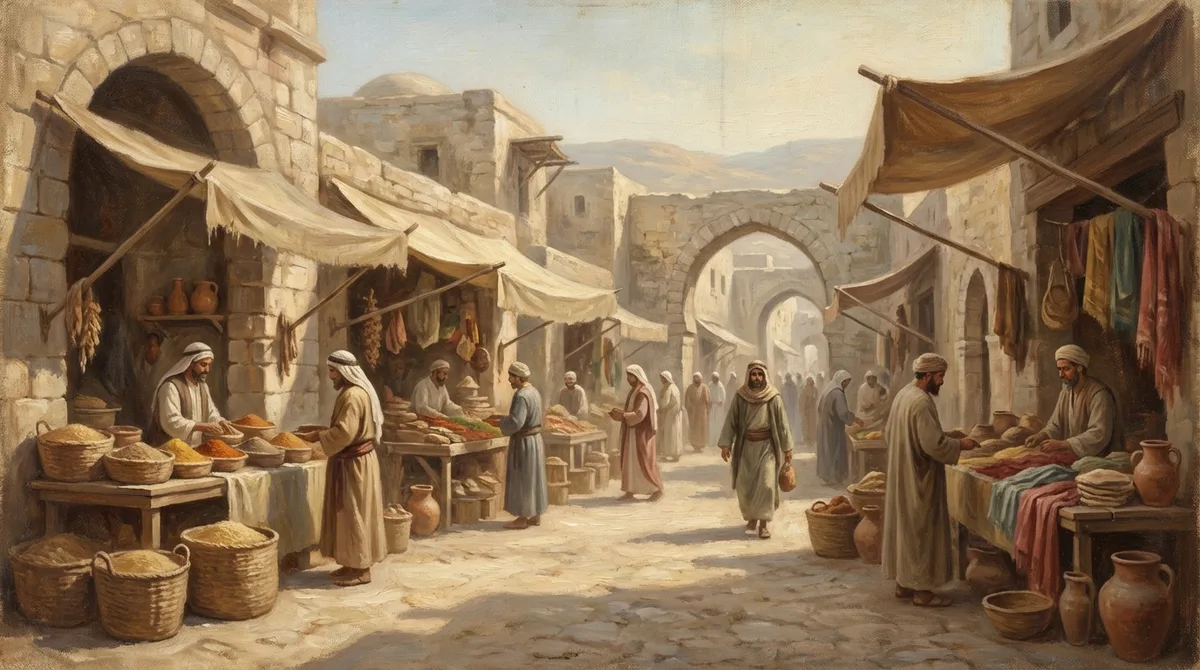
There once was a diverse array of human cultures. In the grand scheme of things it wasn't that long ago—about ten thousand years, or a half of a percent of the human time-line. On six continents, humans lived in comparably small communities, each unique, each independent, and each having minimal contact with one another. The different processes these communities used to gather food, allocate resources, organize themselves, entertain one another, and make sense of their existence, was remarkably dissimilar. Each had a tradition steeped in oral mythology, the generations acting as a historiographical conduit of information—defining and prescribing. As the ages passed, cultures evolved. What worked persisted, and what did not died out. Each surviving community grew stronger, more resilient, and because of the difference in environment and randomness of existence, increasingly particular. Like Darwin's finches of the Galápagos, human groupings, which might have started as one thing in one place, became increasingly diverse.
This went on for a very long time.
Then one such grouping figured out surplus trading, the division of labor, and the common marketplace. And that's when the whole humanity thing really took off.
Like a beast with no predator, this destined culture of central Asia grew, spread, and converted/eradicated all non-conforming human societies throughout Northern Africa, Europe, and East Asia, eventually making it's way across the oceans to Australia and the Americas. We know this culture as civilization.
We think about the civilized world in terms of many different cultures. We extol our species' diversity citing slight geographical differences in food preparation, tipping etiquette, and the preferred type of song and dance. At the most extreme, we note a disparity in the amount of government control over the marketplace, or we battle over disagreements about which of God's prophets is the real deal (some groups are even so far out there as to not even believe in Yahweh/The Father/Allah as the definitive supreme being). However, based on the most accurate anthropological definition of the word, all humans (with a few indigenous exceptions) are a part of one fairly homogeneous culture. We produce the same. We trade the same. We allocate resources the same. We judge the same. We think the same.
And because of the current state of affairs, it could not be any other way. Over the past few millennia, not only did civilization spread, but as it spread it built infrastructure that would make it impossible for the cessation of spreading. This has culminated in a planet infused with and dependent on global communication, trade, governing bodies, entertainment icons, basketball players, and soft drinks. Humans laid a cable under an ocean, and 150 years later we stare collectively at live images transmitted from Mars.
There is a problem with all this.
As we grow closer, we become increasingly vulnerable. It's simple science. The more a collection of organisms depends on one source of sustenance and adheres to one method of living, the more likely that collection of organisms will be subject to catastrophic devastation when the source of sustenance is no longer available and the method of living is no longer viable. To date, we have done an impressive job alleviating negative consequences through the adaption our environment to our needs. But at some point the Earth is going to run out of resources to placate our uniform appetite. At some point we are going to have to figure something else out.
And as the West forces the rest of the world towards its specific vision of a worldwide liberal democracy of cooperative nation states, I wonder what happens when cooperation becomes untenable. What happens if we find our shipping ports suddenly under water? What happens if there's a synchronous run on global capital? What happens if the nations we rely on become unreliable? Do we have the wherewithal to be truly independent? Do we have the means to become a people unique and successful in our method of survival? Will there be a single representative of successful culture left to carry on?
The column as printed
Alarm #36, Winter 2009. Select a page to see it full size.