The last national tragedy
On Hurricane Katrina, the choice between individual and collective responsibility, and whether a nation built on alienation can still be shocked.
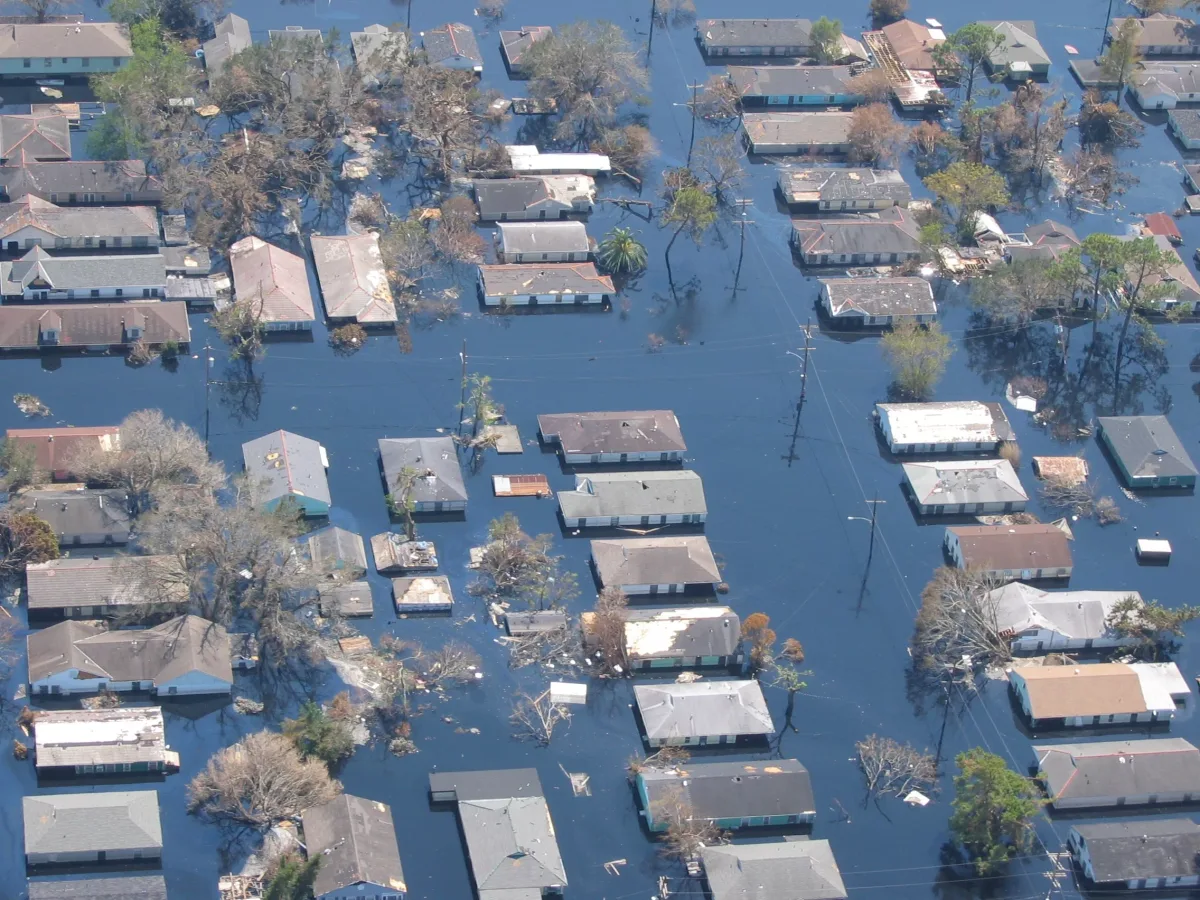
In my previous column, I examined the possibilities of Armageddon and the psychology of current apocalyptics. How fitting. I didn’t recognize anger to be entrenched in the blueprint of social collapse, but for the past week I’ve felt little else when thinking about the recent unleashing of nature’s power onto human civilization. Our objective, however, should be to put this anger aside and stop from lashing out at the incompetent little boy who is still (on paper) in charge of this country. He is an easy target, and it feels right; however, it does not advance us any closer toward understanding what is happening here. This is a crucial time, potentially more crucial than September 11th. The result of that national tragedy was predetermined as part of the Neo-Con playbook, and the horror that erupted four years ago was a tragic but convenient opening for policymakers deluded by their twin faiths in American hegemony and economic imperialism. In contrast, the result of Hurricane Katrina may have the power to wake Americans from an apathetic slumber and force us to examine who we are. If anything, the storm brings forth the idea that the shit will go down in the middle third of North America, and more importantly, that the federal state is ill-equipped, ill-prepared, and ill-motivated to help those who cannot help themselves.
Compare this with another hurricane-vulnerable nation, as reported by Marjorie Cohn, professor at Thomas Jefferson School of Law:
“Last September, a Category 5 hurricane battered the small island of Cuba with 160-mile-per-hour winds. More than 1.5 million Cubans were evacuated to higher ground ahead of the storm. Although the hurricane destroyed 20,000 houses, no one died. What is Cuban President Fidel Castro's secret? According to Dr. Nelson Valdes, a sociology professor at the University of New Mexico, and specialist in Latin America, ‘The whole civil defense is embedded in the community to begin with. People know ahead of time where they are to go…Cuba's leaders go on TV and take charge…Merely sticking people in a stadium is unthinkable’ in Cuba, Valdes said. ‘Shelters all have medical personnel from the neighborhood. They have family doctors in Cuba who evacuate together with the neighborhood, and already know, for example, who needs insulin.’”
My point is not that the United States government should be striving to be more like Castro’s. We have different systems at play, and a national system based on communal benefit at the expense of personal freedom will not work here. There are too many people with too much at stake, and this causes the mentality of the haves to be completely alienated from the realities of the have-nots (accounting for Bush’s recent series of delusional statements – example: “…out of this chaos is going to come a fantastic Gulf Coast...out of the rubbles of Trent Lott's house – the guy lost his entire house – there's going to be a fantastic house. I look forward to sitting on the porch.”). We are part of a nation that values, and has always valued, individualism over collectivism, and it is important for us to understand that alienation is not a defect in our makeup; it is an essential component. This element is illustrated not only by the hypocritical scorn the rightist corporate elite have for the “welfare state,” but also by the beauty created from iconic American artists like Thoreau and Basquiat, Kerouac and Cobain. And it is the reason Americans will individually donate record amounts of their personal income to the Red Cross but will vehemently oppose a raise in taxes necessitated by an enormous aid package to the destroyed region. Our mindset is about individual power, and this natural disaster is proof that, in this land, those without it are in thrall to the whims of those with it, especially in situations of emergency. If tragedy keeps striking, the disadvantaged will keep taking the brunt. The key question: Will we become numb? We are currently immune to poverty, homelessness, and inner-city violence. Are the images of birds devouring American bodies next? Will we grow to shrug off thousands of people chanting in unison, “HELP, HELP, HELP”? Will the third-world meet apathy when it crosses our borders?
At every catastrophe there are two paths to follow:
To the Right, we have a sustained belief in individual action and personal responsibility. This belief is reinforced by arrogant and incompetent federal policy decisions, and therefore, it is vital to the health of our national system.
To the Left, we have a newfound belief in collective responsibility and a subsequent reinvention of the American psyche. This belief would destroy all previously entrenched tradition and culture, and would therefore necessitate a community built from scratch.
Yes, I know which path we will take/are taking/already took. But I wonder how many more times this juggernaut can roll over the unfortunate before the rest of us stop giving. This is the crucial time, when the unfortunate will be forced to take serious action. If tragedies continue to devastate us, our national system will dissolve …either violently against the government if we choose the Left, or violently against the poor if we choose the Right. The last national tragedy will be the wrong choice.
Pull quote: “We are part of a nation that values, and has always valued, individualism over collectivism, and it is important for us to understand that alienation is not a defect in our makeup; it is an essential component.”
The column as printed
Alarm #22, Winter 2005. Select a page to see it full size.